RoadBoosting Northern growth with a 14-mile dual-carriageway tunnel beneath the Peak District, cutting Manchester to Sheffield journey times by up to 30 minutes1
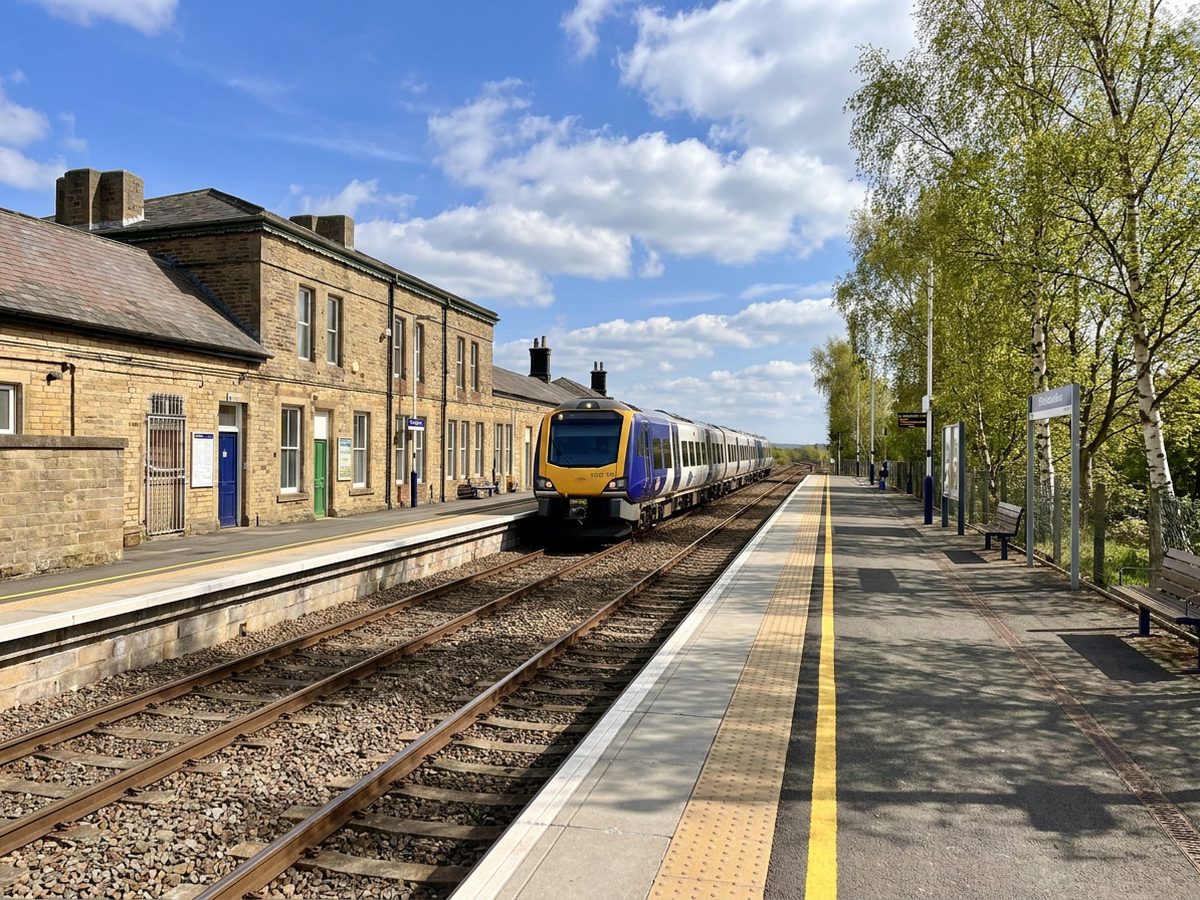
RailBringing the lost Woodhead line back into service, connecting the North with better public transport
RestorationGiving vital land across the Peak District National Park back to nature
A century and a half ago, our ancestors crossed the Pennines with rails and roads. But the lack of modern connections means two great cities, Manchester and Sheffield, cannot reach their economic potential. Today, we can change that, building on Victorian ambition to grow the North and help Britain prosper.
One project, three returns
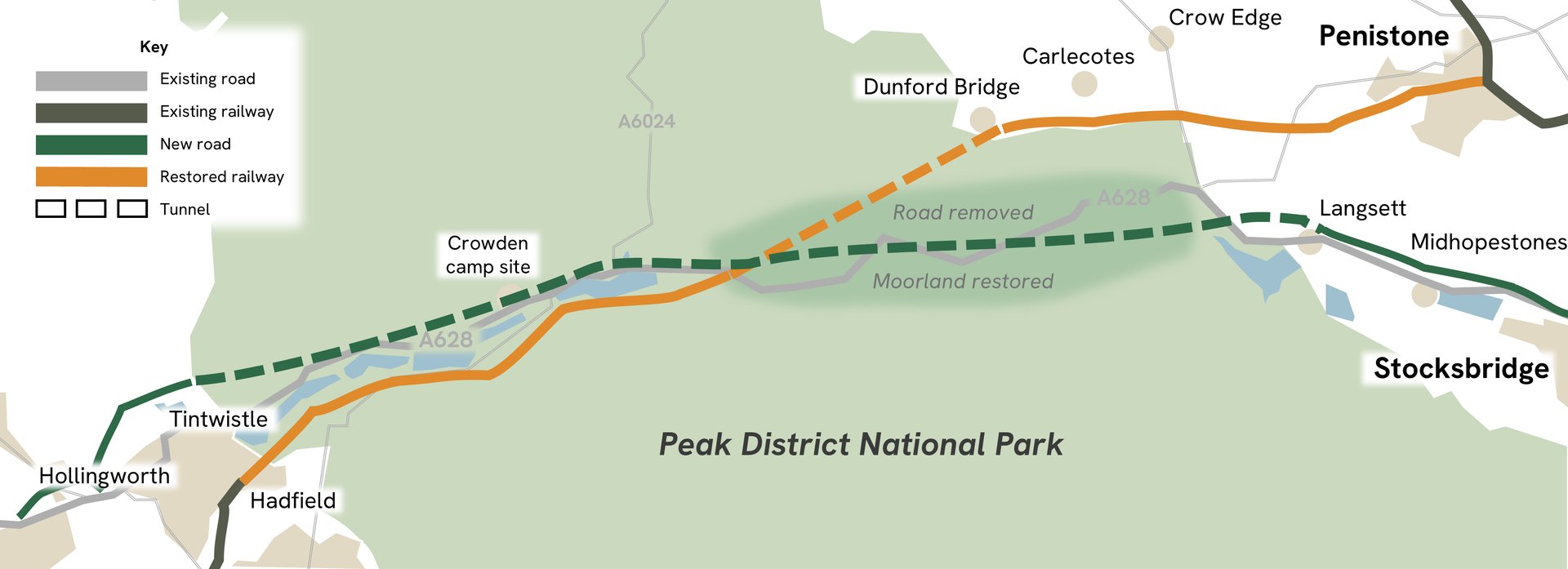
A road below. A railway back. The moors returned
Manchester and Sheffield are the largest pair of UK cities with no dual-carriageway link between them. Trans-Pennine Connect puts a better road below ground, brings a lost railway back into action, and gives the moorland back to nature.
Indicative only. The central crossing shown; journeys continue to each city on existing road and rail. Routes and portals will be shaped with local communities.
Seen, not imagined
What restoration looks like
Drag each slider to compare today with what could be.
The landscape does the work
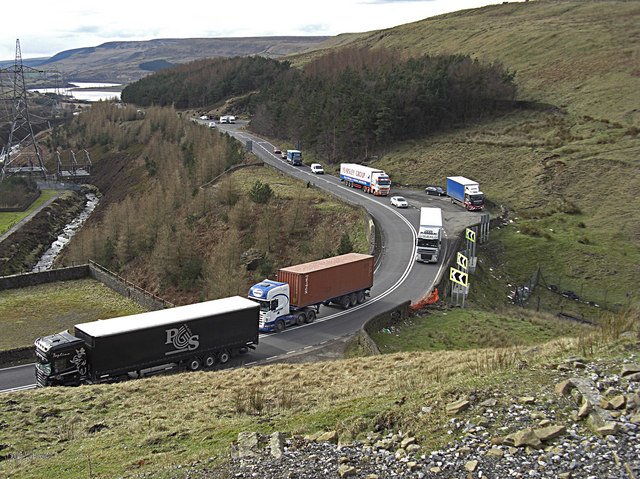
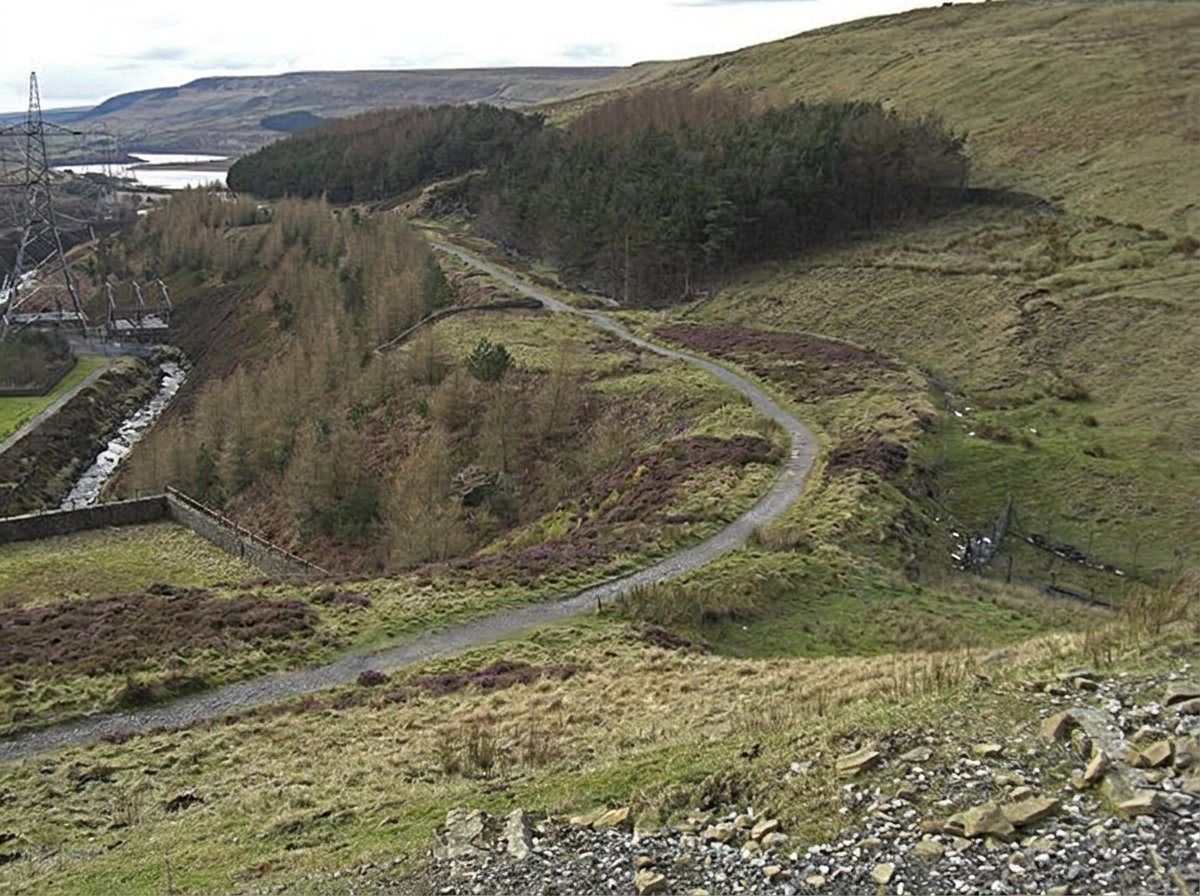
Left: the A628 today. Right: the road removed, the moorland restored.
Thirty-three miles apart. An eighth of the traffic
Manchester and Sheffield are two of the great cities of the North, 33 miles apart. Every other pair of northern cities at that distance moves eight to ten times more people per head. There is no motorway between them, no fast railway, and no plan to build one. It is costing the places on either side, and the places in between.
Vehicles a day per 1,000 people living in the two areas joined. Distance is straight-line, city centre to city centre.2
The Pennines suppress trans-Pennine travel across the board: Manchester to Leeds manages only 12.3. Manchester to Sheffield is the worst case, by a factor of four. This is a gradient of Pennine damage, and this corridor sits at the bottom of it.
Manchester and Sheffield move 2.9 vehicles a day per 1,000 people. Their neighbours manage 24 to 30.
The alternative is failing. The A57 Snake Pass has four active landslip sites and closures on record for at least 90 years. It runs under a 7.5-tonne weight limit, with lorries signed onto a diversion.3
When the Woodhead Pass shuts for snow or high winds, the diversion is the M62, fifteen miles to the north.
Tintwistle and Langsett take national freight traffic through their high streets.
Villages on the A628 have campaigned for bypasses for over fifty years.
The National Park carries 20,000 vehicles a day it was never designed for.
£6bn+ in regional growth from faster journeys and a bigger shared labour market.
Two cities that can behave like one economy.
Towns on the route back at the heart of the Northern economy, not in the way of it.
The Department for Transport studied this tunnel between 2015 and 2021, and found strong demand and a benefit-cost ratio of around 1.8. Its published report called the link between Manchester and Sheffield a “missing link” whose completion “could trigger a step change in economic performance for the north”, and costed the scheme at between £7.8bn and £11.6bn.4 It was not built. So the North lives with the problem, while other countries solve it.
Other countries would have closed this gap fifty years ago. We have spent that time arguing about it. The North doesn't need a debate about infrastructure. It needs this road and this railway.
The plan, in full
Nature, restored
The A628 runs through a fine landscape of hills, lakes and high moors. Over 20,000 vehicles a day use the existing roads, many of them lorries. Getting this traffic underground will help. Tearing up the tarmac, so that nature is truly restored, is even better: exactly what was done for the A3 at Hindhead in Surrey, to huge environmental gain.5 Away from the National Park, we want to work with existing roads and finally deliver the bypasses local communities have demanded for decades.
A better road
This project began life inside government, as an alternative to plans for widening the road through the Peak District National Park. It asked a simple question: instead of widening a road on the surface, would it be better to build a better road, and bury it? Successive governments in Whitehall baulked at the cost. We've found a way to deliver world-class infrastructure at as little as one tenth the cost. It would be a modern dual carriageway, with bypasses around villages like Tintwistle and Langsett built in from the start.
A restored railway
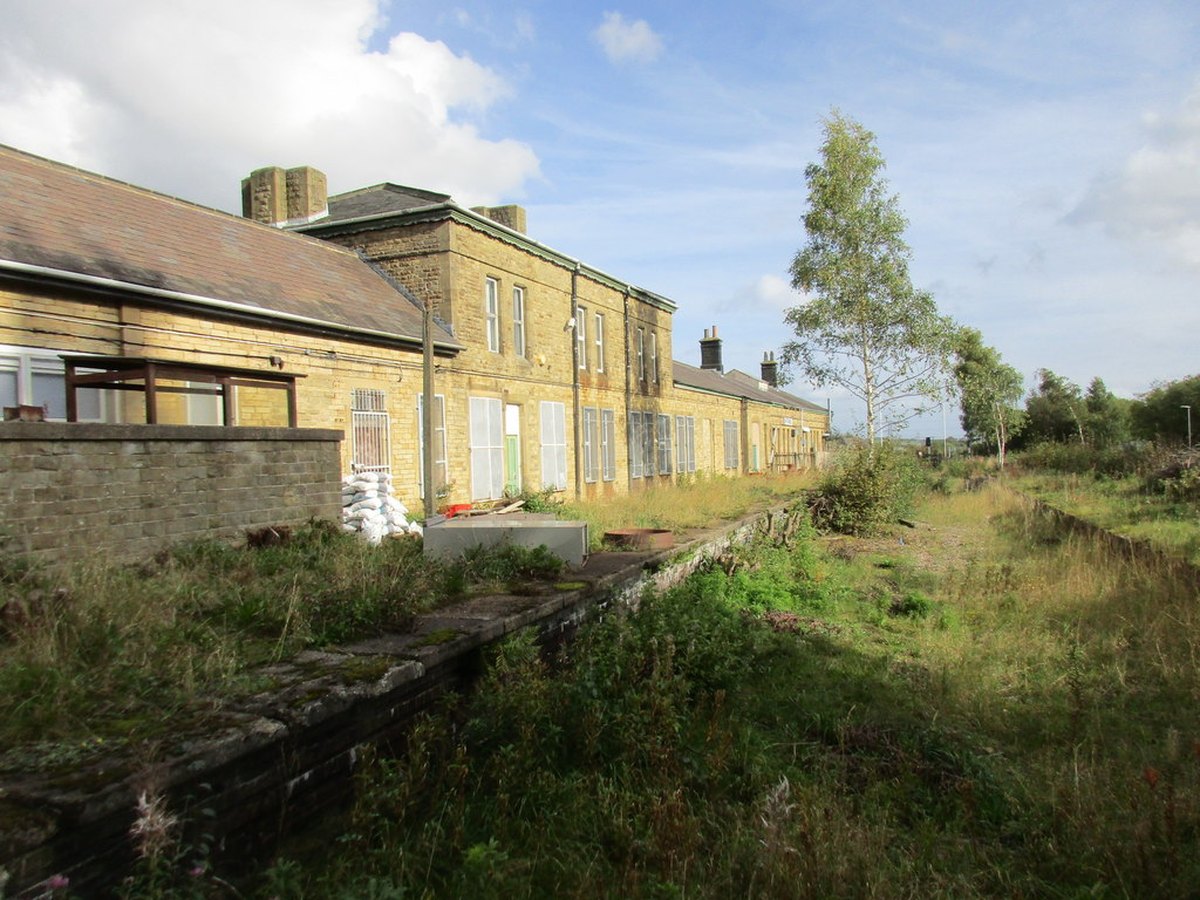
The Woodhead line was the first electrified rail route across the Pennines, upgraded in the 1950s and closed in the 1980s after coal traffic declined. The alignment has been protected from development, making restoration comparatively straightforward, and cheapest while tunnelling crews are already on site. The project also takes the opportunity to move the existing power cables that run through the old tunnel, clearing the way to reopen the line. In 1969 the Woodhead expresses ran Manchester to Sheffield in 50 minutes, every hour. Today the typical journey is slower.6 Restoring the line gives people and freight a new way across the North and takes thousands of lorry movements off the roads. The old railway path is a much-loved walking and cycling route, and an equally good route will replace it.
When Westminster looked at a Manchester to Sheffield tunnel, its own study put the cost at between £7.8bn and £11.6bn, and the scheme was judged too expensive to build. Built the Scandinavian way, we believe it can be done for under £2bn: roughly a quarter of the cheapest option the government costed.
The government’s own study costed a tunnelled scheme at between £7.8bn and £11.6bn. In Scandinavia, tunnels of similar length through similar rock are built for a fraction of that.
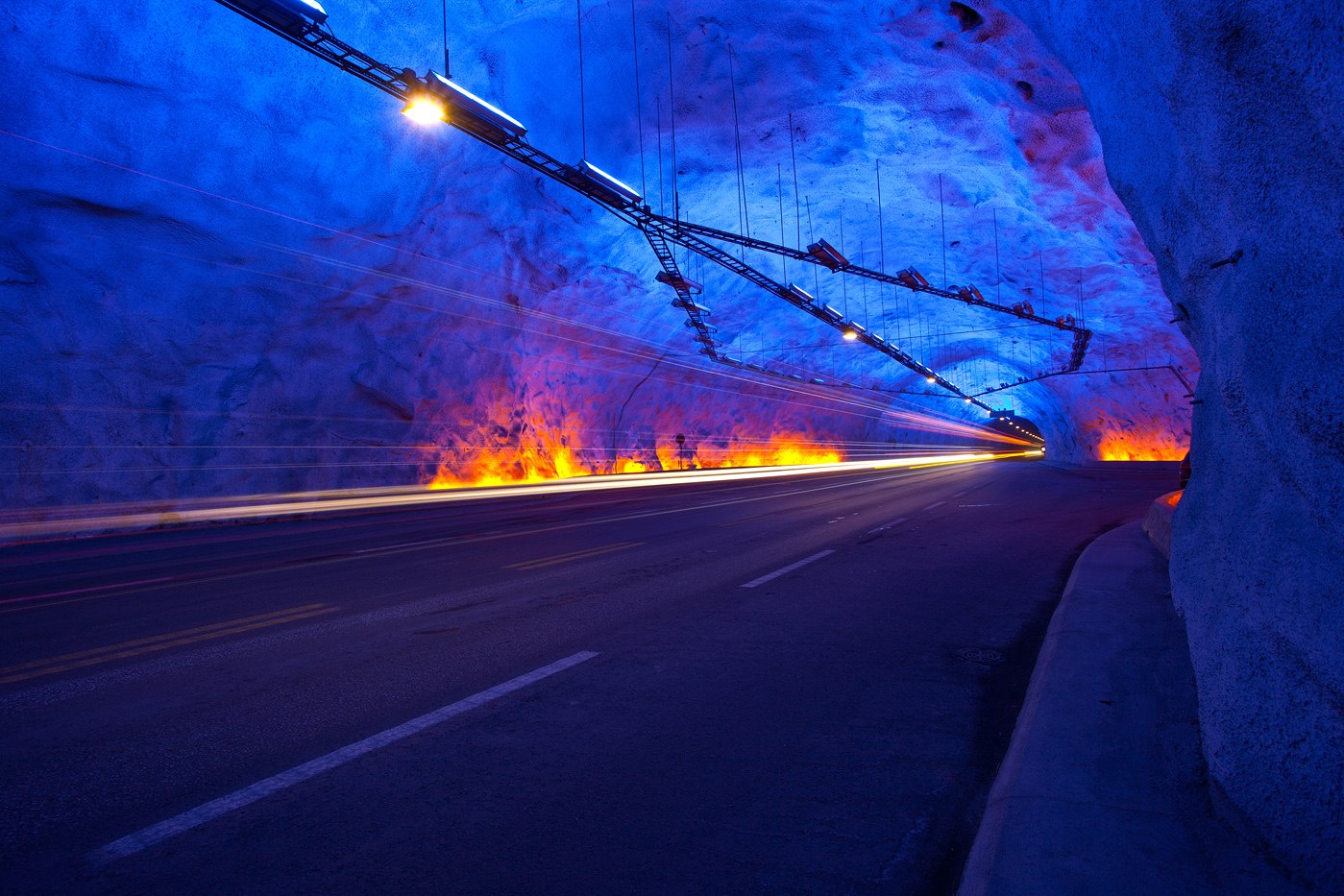
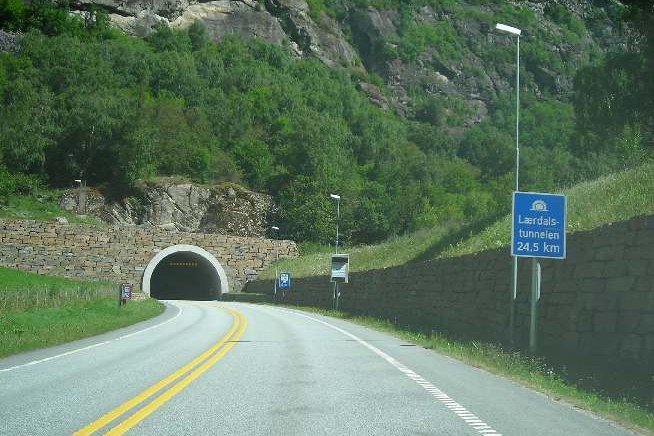
Lærdal, Norway (24.5km, world's longest road tunnel)7~£130m total
Ryfast, Norway (23.5km of tunnel, 292m below sea level)7under £800m
UK Government estimate, tunnelled scheme (2016)4£7.8bn to £11.6bn
Why such a difference?
UK tunnels use large boring machines and heavy concrete linings. Scandinavian tunnels use a simpler method, drill and blast, which needs far less equipment and makes better use of the natural strength of the rock.
The government's own study reached the same view of the geology that we have: the Pennine bedrock is millstone grit, and it is well suited to tunnelling.8 Where we differ is method. The study assumed a boring machine, because a machine advances faster. Speed is not the same as value. The rock here is hard and strong, comparable to the geology of Norwegian projects where tunnels are being driven by drill and blast right now, and shaping the tunnel to the road rather than to a machine is what brings the cost down.
The same road needs a far bigger hole if you cut it with a circle. Shaping the tunnel to the road removes roughly 40% less rock, and hard Pennine rock lets it largely support itself: far less machinery, far less concrete.
At the prices seen in Scandinavia today, a tunnel from one side of the Peak District to the other would cost less than £2bn. The savings are large enough that the tunnel can cover its own costs and pay to restore the Woodhead railway at the same time.
The Department for Transport's own study found that a new link would carry 35,000 to 80,000 vehicles a day, transforming transport between the two cities. The railway makes that impact bigger still.
Government typically puts tolls on bridges and long tunnels. If we keep that part of the plan, it opens up many options for how this project can get started, and none of them depend on permission from London.
Owned in the North
In Norway and the Faroe Islands, tunnels like this are owned by local authorities and paid off from tolls over the years that follow. It is how Liverpool and Newcastle built the Mersey and Tyne tunnels.
Northern money, Northern infrastructure
Local government pension funds across the North hold more than £100bn. The Northern LGPS pool alone, covering Greater Manchester, Merseyside and West Yorkshire, holds £61bn: the retirement saving of 870,000 people who live on both sides of this gap.9 Almost none of it is invested in the road and rail they use.
Private finance
UK and international investors are willing to put money behind British projects. Much of the recent growth of Manchester and other Northern cities has been funded by private investors who believed those cities would succeed.
Our promise
With communities, not through them
A project like this earns its place by being built with the people who live alongside it, not imposed on them from London.
We have been talking to local leaders since the start of 2026, and we want to work with everyone living along the A628 and A616 to shape the design from the very beginning. Where the scheme brings change, it should bring benefits too: the bypasses villages have asked for, a better walking and cycling route to replace the old one, and a fair share of what the project creates.
Local people help shape the route, the portals and the restored landscape from day one, not after the decisions are made.
Bypasses delivered
Tintwistle, Langsett and others finally get the relief from through-traffic they've campaigned for over decades.
Routes protected
The much-loved Woodhead walking and cycling route is replaced with something as good or better.
Who we are
Future Works is a group of infrastructure experts who believe Britain should be building bolder and faster. Between us we've worked on more than £100bn of projects: the ones that worked, and the ones that didn't. We're a non-political, non-partisan organisation with support from industry, think tanks, local groups and across the political spectrum.
Michael Dnes
Co-founder
Nearly 20 years at the Department for Transport, leading £40bn+ of national road programmes and creating the A66 Trans-Pennine upgrade.
Alex Griffiths
Co-founder
Infrastructure delivery roles including Sizewell C and HS2. MSc in Major Programme Management, Oxford. Former Royal Engineers.
Get involved
Have your say
Our proposed route is just that, a proposal. We will work closely with local communities to go through the fine details and settle on a route that works for the people it will benefit most.
So, whether you live along the route, travel between the cities, or simply care about the future of the North, we want to hear from you, whatever your view of the plan.
We'll be holding sessions along the route through 2026; let us know if you are local and would like to be involved.
Up to 30 minutes saved. DfT / Highways England, Trans-Pennine Tunnel Study: Stage 3 Report (November 2016), section 1.4.6: a saving of up to 30 minutes for both passenger and freight traffic between Manchester and Sheffield.
Traffic and population figures behind the chart. Traffic: mobile phone data, 2015, the most recent published figures. DfT / Highways England, Trans-Pennine Tunnel Study: Stage 3 Report (November 2016), p.5. Population: ONS Mid-Year Estimates, England and Wales, MYE24 Table MYE2, metropolitan counties, published 30 July 2025.
Government cost estimate, £7.8bn to £11.6bn. DfT / Highways England, Trans-Pennine Tunnel Study: Stage 3 Report, Table 6-1. The range covers five route options and includes project risk, at 2014 prices. Inflation and portfolio risk are excluded.
The A3 at Hindhead. The A3 was put into a tunnel beneath the Devil's Punch Bowl in Surrey and the surface road removed, returning the heathland to nature. BBC News.
Woodhead journey times, 1969. British Rail passenger timetable, Table 117 (Manchester, Glossop and Guide Bridge to Sheffield, and the reverse), 1969. The hourly Sheffield Victoria to Manchester Piccadilly expresses are timed at 50 minutes throughout the day: 11:45 to 12:35, 12:45 to 13:35, 13:45 to 14:35, 14:45 to 15:35, and 15:45 to 16:35. Eastbound services run to a similar timing. The line was electrified in 1954 and closed to passengers in January 1970. Typical Manchester to Sheffield rail journeys today, via the Hope Valley, take longer.
Scandinavian tunnel costs.Lærdal (24.5km, opened 2000, the world's longest road tunnel) cost 1.082 billion Norwegian kroner, about £90m at the time; the figure shown here is adjusted for inflation to today's money. Lærdal Tunnel. Ryfast (opened 2019) comprises three tunnels totalling 23.5km, including the Ryfylke tunnel, the world's longest and deepest subsea road tunnel at 14.4km and 292m below sea level. Core construction cost was approximately 8.1 billion Norwegian kroner at 2019 values, funded by tolls through a company owned by Rogaland county and Stavanger municipality. Nordic Investment Bank; Ryfast. The cost shown excludes the separate Eiganes tunnel extension.
Pennine geology and tunnelling method.Trans-Pennine Tunnel Study: Stage 3 Report, section 4.3. It records that the bedrock is largely millstone grit, generally suitable for large-diameter tunnels, and that a boring machine is the preferred method for long tunnels because of the speed of advancement. We agree on the rock and differ on the method.
Northern local government pension assets.Northern LGPS reports £61bn under management for the Greater Manchester, Merseyside and West Yorkshire funds, around a fifth of all Local Government Pension Scheme assets. The £100bn+ figure adds the northern partner funds of the Border to Coast pool, including South Yorkshire, Teesside, Tyne and Wear, Durham and North Yorkshire. Pension funds allocate only a portion of their assets to infrastructure; the point is that the capital exists in the North, not that any one fund would meet the cost alone.
Image credits appear beneath the images they relate to. Where a figure is marked as indicative or as our own estimate, it is our work and not a government figure.